Ceramic Tiles Manufacturing
Ceramic Tiles Manufacturing
Crafted for excellence. We utilize world-class production technology, high-pressure molding, and advanced digital printing to create premium ceramic and vitrified surfaces. Step inside our process and see how raw earth is transformed into architectural masterpieces.
Raw material
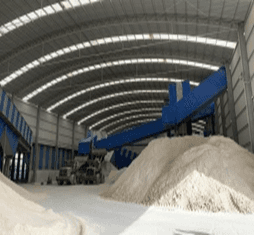
Raw materials normally used in a ceramic tile are Quartz, Feldspar, Talc, Kaolin, Ball clay, China Clay Bentonite, Dolomite, Calcite, STPP, SLS, Water, etc.The most important component of a ceramic tile body is clay. Clay is a term for naturally occurring mineral aggregates consisting mainly in ceramic Tiles.
Raw material
Raw materials normally used in a ceramic tile are Quartz, Feldspar, Talc, Kaolin, Ball clay, China Clay Bentonite, Dolomite, Calcite, STPP, SLS, Water, etc.The most important component of a ceramic tile body is clay. Clay is a term for naturally occurring mineral aggregates consisting mainly in ceramic Tiles.
Raw material
Raw materials normally used in a ceramic tile are Quartz, Feldspar, Talc, Kaolin, Ball clay, China Clay Bentonite, Dolomite, Calcite, STPP, SLS, Water, etc.The most important component of a ceramic tile body is clay. Clay is a term for naturally occurring mineral aggregates consisting mainly in ceramic Tiles.
Lab testing / Mixing of raw material
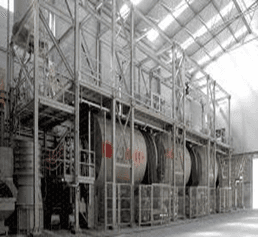
Raw minerals are first tested in the laboratory at the factory for quality. The raw materials must be pulverized and classified according to particle size. One of the most common types of such mills is the ball mill, which consists of large rotating cylinders partially filled with spherical grinding media.
Lab testing / Mixing of raw material
Raw minerals are first tested in the laboratory at the factory for quality. The raw materials must be pulverized and classified according to particle size. One of the most common types of such mills is the ball mill, which consists of large rotating cylinders partially filled with spherical grinding media.
Lab testing / Mixing of raw material
Raw minerals are first tested in the laboratory at the factory for quality. The raw materials must be pulverized and classified according to particle size. One of the most common types of such mills is the ball mill, which consists of large rotating cylinders partially filled with spherical grinding media.
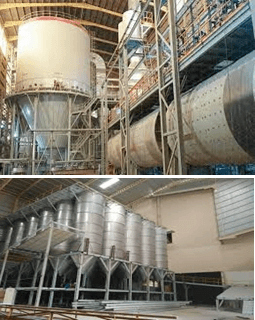
Spray dryer & Storage of raw materials
A spray dryer takes a liquid stream and separates the solute or suspension as a solid and the solvent into a vapor. The solid is usually collected in a drum or cyclone. The liquid input stream is sprayed through a nozzle into a hot vapor stream and vaporized.Each batch of raw material is stored in multiple silos but they are never mixed with multiple batches in order to maintain the production quality.
Spray dryer & Storage of raw materials
A spray dryer takes a liquid stream and separates the solute or suspension as a solid and the solvent into a vapor. The solid is usually collected in a drum or cyclone. The liquid input stream is sprayed through a nozzle into a hot vapor stream and vaporized.Each batch of raw material is stored in multiple silos but they are never mixed with multiple batches in order to maintain the production quality.
Spray dryer & Storage of raw materials
A spray dryer takes a liquid stream and separates the solute or suspension as a solid and the solvent into a vapor. The solid is usually collected in a drum or cyclone. The liquid input stream is sprayed through a nozzle into a hot vapor stream and vaporized.Each batch of raw material is stored in multiple silos but they are never mixed with multiple batches in order to maintain the production quality.
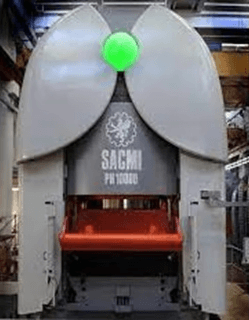
Production / Molding / Shaping
The pressing pressure differs for different types of tiles. In the case of white-body floor tiles, a pressure below 300MPa is used, while for vitrified tiles of the same size it is necessary to use pressures of 350-400MPa. Drying of the ceramic tile is carried out between the pressing stage and the firing process.
Production / Molding / Shaping
The pressing pressure differs for different types of tiles. In the case of white-body floor tiles, a pressure below 300MPa is used, while for vitrified tiles of the same size it is necessary to use pressures of 350-400MPa. Drying of the ceramic tile is carried out between the pressing stage and the firing process.
Production / Molding / Shaping
The pressing pressure differs for different types of tiles. In the case of white-body floor tiles, a pressure below 300MPa is used, while for vitrified tiles of the same size it is necessary to use pressures of 350-400MPa. Drying of the ceramic tile is carried out between the pressing stage and the firing process.
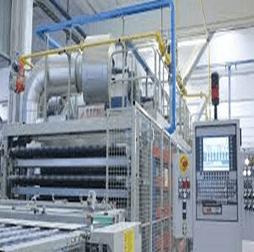
Drying
The drying process in the ceramic industry is the greatest energy consumer second to firing process. Drying means loss of moisture from the surface of substance by the evaporation, and the drying speed depends on the temperature and humidity.
Drying
The drying process in the ceramic industry is the greatest energy consumer second to firing process. Drying means loss of moisture from the surface of substance by the evaporation, and the drying speed depends on the temperature and humidity.
Drying
The drying process in the ceramic industry is the greatest energy consumer second to firing process. Drying means loss of moisture from the surface of substance by the evaporation, and the drying speed depends on the temperature and humidity.
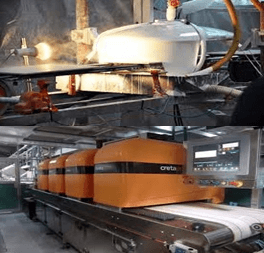
Glazing / Coloring / Surface Preparation
Glazes are a liquid suspension of finely ground minerals that are applied onto the surface of bisque-fired. Ceramic colorants are added to create design on surface by digital printing machine. Recently Digital printing machine is a latest technology in ceramic tile manufacturing.
Glazing / Coloring / Surface Preparation
Glazes are a liquid suspension of finely ground minerals that are applied onto the surface of bisque-fired. Ceramic colorants are added to create design on surface by digital printing machine. Recently Digital printing machine is a latest technology in ceramic tile manufacturing.
Glazing / Coloring / Surface Preparation
Glazes are a liquid suspension of finely ground minerals that are applied onto the surface of bisque-fired. Ceramic colorants are added to create design on surface by digital printing machine. Recently Digital printing machine is a latest technology in ceramic tile manufacturing.
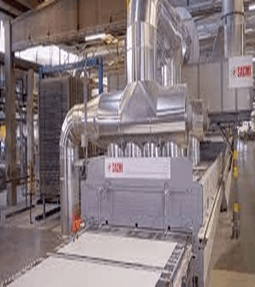
Firing Auxiliaries in Kiln
Ceramic ware by brushing, pouring, or dipping. After the glaze dries, the ware is loaded into a kiln and fired to the temperature at which the glaze ingredients will melt together to form a glassy surface. fired at temperatures from 950°C to 1250°C to make them acquire the required properties in a stable way
Firing Auxiliaries in Kiln
Ceramic ware by brushing, pouring, or dipping. After the glaze dries, the ware is loaded into a kiln and fired to the temperature at which the glaze ingredients will melt together to form a glassy surface. fired at temperatures from 950°C to 1250°C to make them acquire the required properties in a stable way
Firing Auxiliaries in Kiln
Ceramic ware by brushing, pouring, or dipping. After the glaze dries, the ware is loaded into a kiln and fired to the temperature at which the glaze ingredients will melt together to form a glassy surface. fired at temperatures from 950°C to 1250°C to make them acquire the required properties in a stable way
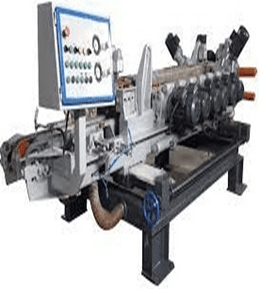
Polishing / Sizing
Polishing refers to processes that uses an abrasive that is glued to the work wheel, , while buffing is less harsh, which leads to a smoother, brighter finish.The corresponding size of the cutting tool to ensure the size of the ceramic parts to be processed, this method is called the size method, which mainly USES the standard size of the cutting tool processing.
Polishing / Sizing
Polishing refers to processes that uses an abrasive that is glued to the work wheel, , while buffing is less harsh, which leads to a smoother, brighter finish.The corresponding size of the cutting tool to ensure the size of the ceramic parts to be processed, this method is called the size method, which mainly USES the standard size of the cutting tool processing.
Polishing / Sizing
Polishing refers to processes that uses an abrasive that is glued to the work wheel, , while buffing is less harsh, which leads to a smoother, brighter finish.The corresponding size of the cutting tool to ensure the size of the ceramic parts to be processed, this method is called the size method, which mainly USES the standard size of the cutting tool processing.
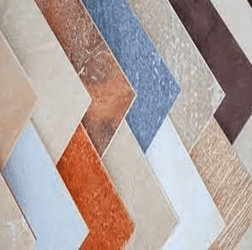
Shorting Grade wise
Production technology of ceramic tiles, The system comprises a ceramic tile conveying mechanism, an image acquisition module, a master control module and a sorting module, wherein the image acquisition module, the master control module and the sorting module are grade wise sequentially.
Shorting Grade wise
Production technology of ceramic tiles, The system comprises a ceramic tile conveying mechanism, an image acquisition module, a master control module and a sorting module, wherein the image acquisition module, the master control module and the sorting module are grade wise sequentially.
Shorting Grade wise
Production technology of ceramic tiles, The system comprises a ceramic tile conveying mechanism, an image acquisition module, a master control module and a sorting module, wherein the image acquisition module, the master control module and the sorting module are grade wise sequentially.
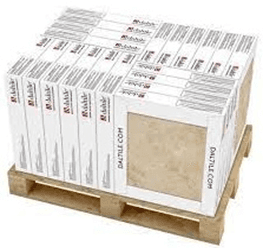
Packing / Palletizing for Export
Packaging is the most important and basic element of customer service. While Export tiles from a tile manufacturer, checking for packaging. Durable boxes, Protection corners, Strapped boxes, Wooden Pallet Packaging, Proper wrapping and secure sealing.
Packing / Palletizing for Export
Packaging is the most important and basic element of customer service. While Export tiles from a tile manufacturer, checking for packaging. Durable boxes, Protection corners, Strapped boxes, Wooden Pallet Packaging, Proper wrapping and secure sealing.
Packing / Palletizing for Export
Packaging is the most important and basic element of customer service. While Export tiles from a tile manufacturer, checking for packaging. Durable boxes, Protection corners, Strapped boxes, Wooden Pallet Packaging, Proper wrapping and secure sealing.
Contact
Get in touch
For any inquiries or to explore your vision further, we invite you to contact our professional team using the details provided below.

Contact
Get in touch
For any inquiries or to explore your vision further, we invite you to contact our professional team using the details provided below.
Contact
Get in touch
For any inquiries or to explore your vision further, we invite you to contact our professional team using the details provided below.